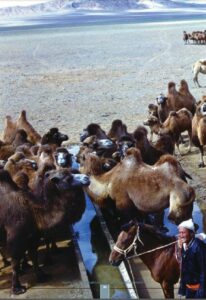
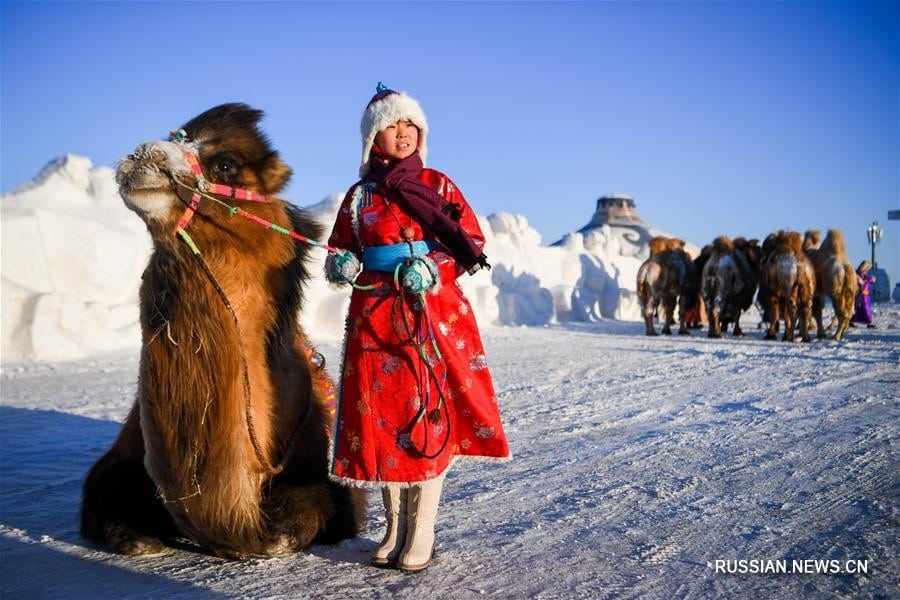
The original birthplace of the Mongolian Camels(Bactrian) was the great Gobi. Mongolians domesticated wild camels and bred them. Since then many centuries have passed. The Bactrian camels of Mongolia are the best of the herd of camels. The chest of the Mongolian Bactrian camel is deep and broad; these animals have two humps and their wool is thick and soft. The hair on the knees and throat (zogdor) of camels and hackle on their napes of necks (del) are abundant. They are hardy in the cold. The best pedigrees of the Mongolian Camel(Bactrian) are the galbiin goviin ulaan and khaniin hetsiin khüren camels.
Mongolians use them for riding and pulling carts. In addition, Mongolians have the tradition to race camels. It is a tradition that is celebrated on a camel day festival by the camel herders in the autumn and winter. We traditionally celebrate camel day when the camel population increases and reaches a thousand or ten thousand, and we extol their yields. We also used to celebrate camel day on the occasion of other events. The camel breeders celebrate the “silver peg” festival which is very peculiar. It is the particular custom on the camel day. There are gelding camel and yearling camel races. There are competitions to whittle wooden pegs. In winter, camel herders start unhitching camels from their companions and coaching them to race.
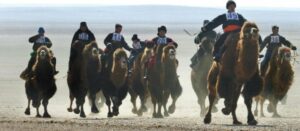
On the camel racing day, camel breeders including male and female and young and old people, all of whom dress in their various colored silk surfaced gowns and tilt their caps made from fox, sable, budge, and baby camel pelt to their foreheads. The camels they ride are festooned with scarves. They are in fine fettle.
The camel breeders mostly race gelding and yearling camels. The yearling camels race within around eight kilometers. The gelding-camels race around ten kilometers. The racing camels simultaneously start from the starting line. They trot through the knolls and drifted snow and some of them frolic while trotting. They seem like animate objects when you see them. They make you feel exuberant in spirit. Winning camels and their owners are anointed with milk and dairy products. The exploits of winning camels are recited to rhythmical tunes. After the racing competition, other events concerning camels occur. The camel day is one of the rare events for Mongolian camel breeders.