
Mongolian food history begins with movement. Pastoral households raised sheep, goats, cattle, yaks, horses and camels across a climate where pasture, water and temperature change dramatically by season. Meat and dairy were central, but grain, tea, wild plants, trade and later urban markets also shaped what people ate.
There has never been one timeless “nomad diet.” Region, wealth, herd composition, religious practice and access to towns all matter. Modern nutrition research also shows that cultural categories are not the same as medical evidence.
Quick answer: what shaped Mongolian cuisine?
Livestock supplied energy-dense food that could be eaten fresh, fermented, dried or stored. Summer favored milk products; colder seasons relied more heavily on meat and preserved foods. Trade introduced tea, flour, rice, vegetables and spices, while twentieth- and twenty-first-century urbanization expanded the range of everyday meals.
Pastoralism and the five main livestock species
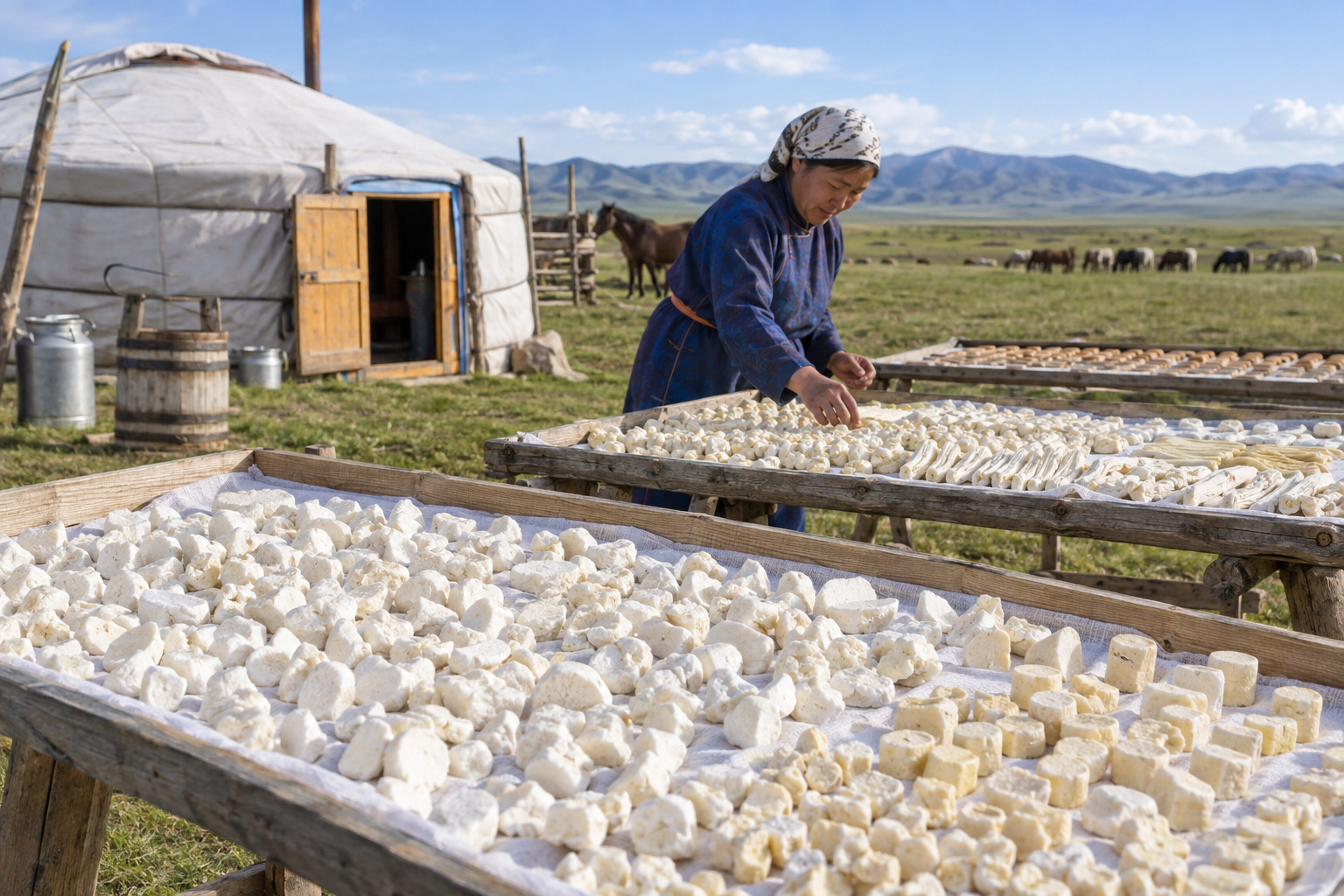
Mongolians traditionally speak of the “five snouts”: sheep, goats, cattle or yaks, horses and camels. Each fits different pasture and produces different meat, milk, fiber, transport and social value. A household’s menu therefore depends on where it lives and which animals it keeps.
Sheep meat is widely valued; cattle and yak products are important in suitable regions; camel milk belongs particularly to the Gobi; and mare’s milk becomes airag during the warm season. Herding choices are ecological and economic, not simply culinary preferences.
White foods: milk and dairy
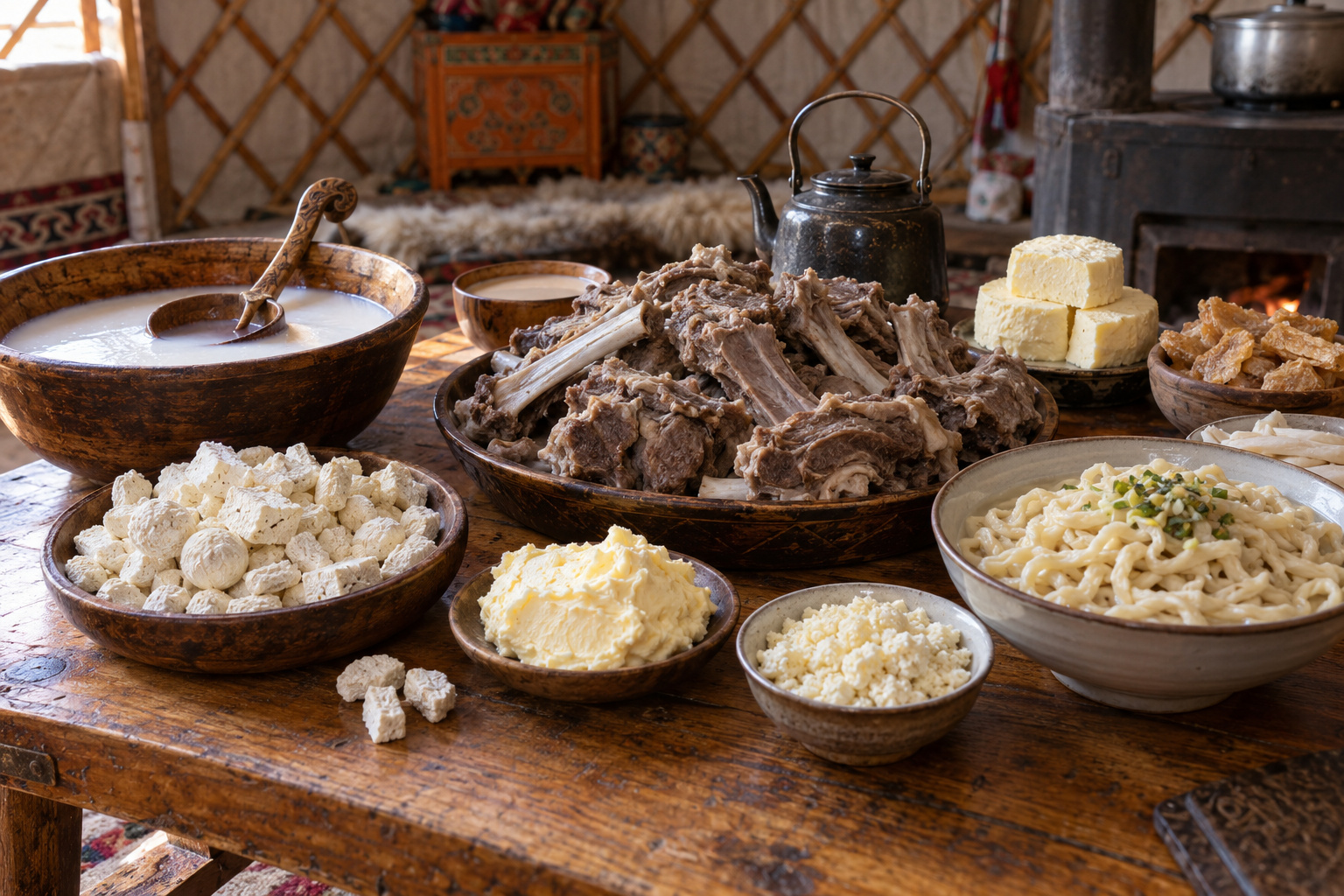
Tsagaan idee, or white foods, include milk tea, yogurt, cream, butter, curds, cheeses and fermented drinks. The category carries ideas of purity, hospitality and abundance as well as nutrition.
Fresh milk spoils quickly, so households developed multiple transformations. Aaruul is made by draining and drying curd; hard pieces can keep for long periods. Fermentation produces distinct foods and drinks, including airag. Techniques differ by animal, season and family.
Red foods: meat and winter energy
Meat is sometimes grouped as “red food.” Boiling is common because it is practical and preserves the character of the meat. Dumplings such as buuz and bansh combine meat with flour, while khuushuur is fried. Borts—meat dried in thin strips—provides a light, concentrated store for winter or travel.
Older descriptions can make heavy meat consumption sound universally healthy. It is not. Portion, activity, vegetables, salt and an individual’s health all matter. Historical adaptation to scarcity should not be turned into a modern medical claim.
Grain, tea and exchange
Pastoral households were never completely isolated from farming and trade. Barley, millet and later wheat flour entered meals through cultivation, exchange and state supply. Brick tea traveled across Inner Asia and became the base of süütei tsai, milk tea often lightly salted.
Flour now appears in noodles, dumplings, fried breads and packaged foods. Rice, potatoes, carrots, cabbage and other vegetables are common in contemporary cooking, especially in towns.
The cultural five-color classification
Some Mongolian explanations organize food symbolically as white, red, yellow, green and black. White commonly refers to dairy and red to meat. Yellow may describe butter-rich or grain foods, green can evoke plants, and black may include water or tea depending on the source.
This is a cultural framework, not a standardized food pyramid. Meanings vary, and the colors should not be used to diagnose deficiency or promise health benefits.
Seasonal eating
Spring historically brought tight supplies after winter. Summer produced abundant milk, allowing families to consume fresh dairy and prepare stores. Autumn was a time to fatten animals and preserve food. Winter meals emphasized warming, durable ingredients.
Refrigeration, shops and transport have softened these boundaries, but weather still affects rural availability and price. Seasonal knowledge remains visible in household preparations and festival foods.
Food safety and fermentation
Traditional skill does not remove all biological risk. Raw milk can carry harmful microorganisms, meat must be handled at safe temperatures and home fermentation can vary in alcohol content. Pregnant people, young children, older adults and anyone with reduced immunity should be especially cautious with unpasteurized products.
Diet and health today
Mongolia now faces both food insecurity and diet-related disease. Research on contemporary dietary intake reports high consumption of refined grains and meat in some groups alongside low fruit, vegetable and dietary diversity. The answer is not to shame traditional food, but to pair cultural knowledge with affordable variety and current health guidance.
Hospitality and the shared table
Tea is commonly offered first. Guests may receive dairy food, sweets or a substantial meat dish depending on the household and occasion. Accepting a small taste can show respect, but allergies, medical restrictions and a decision not to drink alcohol can be explained politely.
Frequently asked questions
Is Mongolian food only meat and dairy?
No. Those foods are historically important, but grain, tea, vegetables, wild plants and traded foods have long contributed, and modern diets are diverse.
What is aaruul?
Aaruul is drained and dried curd. Texture and flavor range from soft and tart to very hard and long-lasting.
Is airag non-alcoholic?
No. Fermented mare’s milk is usually mildly alcoholic, and strength varies.
Sources and related reading
See the FAO overview of milk in Mongolia, research on dairy pastoralism on the eastern steppe and a study of contemporary dietary intake. Continue with our guides to Mongolian cuisine, airag and milk vodka.