

The Tsaatan are a small community of reindeer herders living in the mountains and forests near Tsagaannuur in Mongolia’s Khövsgöl Province. Many people also use the name Dukha. Their lives are connected to domestic reindeer, taiga pasture, seasonal movement and relationships that extend across the Mongolian–Russian border region.
They are not a museum community frozen in the past. Tsaatan families use mobile phones, motorbikes, schools and public services alongside inherited herding knowledge. A useful account must therefore explain both continuity and change.
Quick answer: who are the Tsaatan?
Tsaatan literally means “people with reindeer” in Mongolian. Dukha is an ethnonym many community members use for themselves. Most families live or maintain ties in the East and West Taiga beyond Tsagaannuur, while others reside in the town for schooling, health care, work or retirement.
Where Mongolia’s reindeer herders live
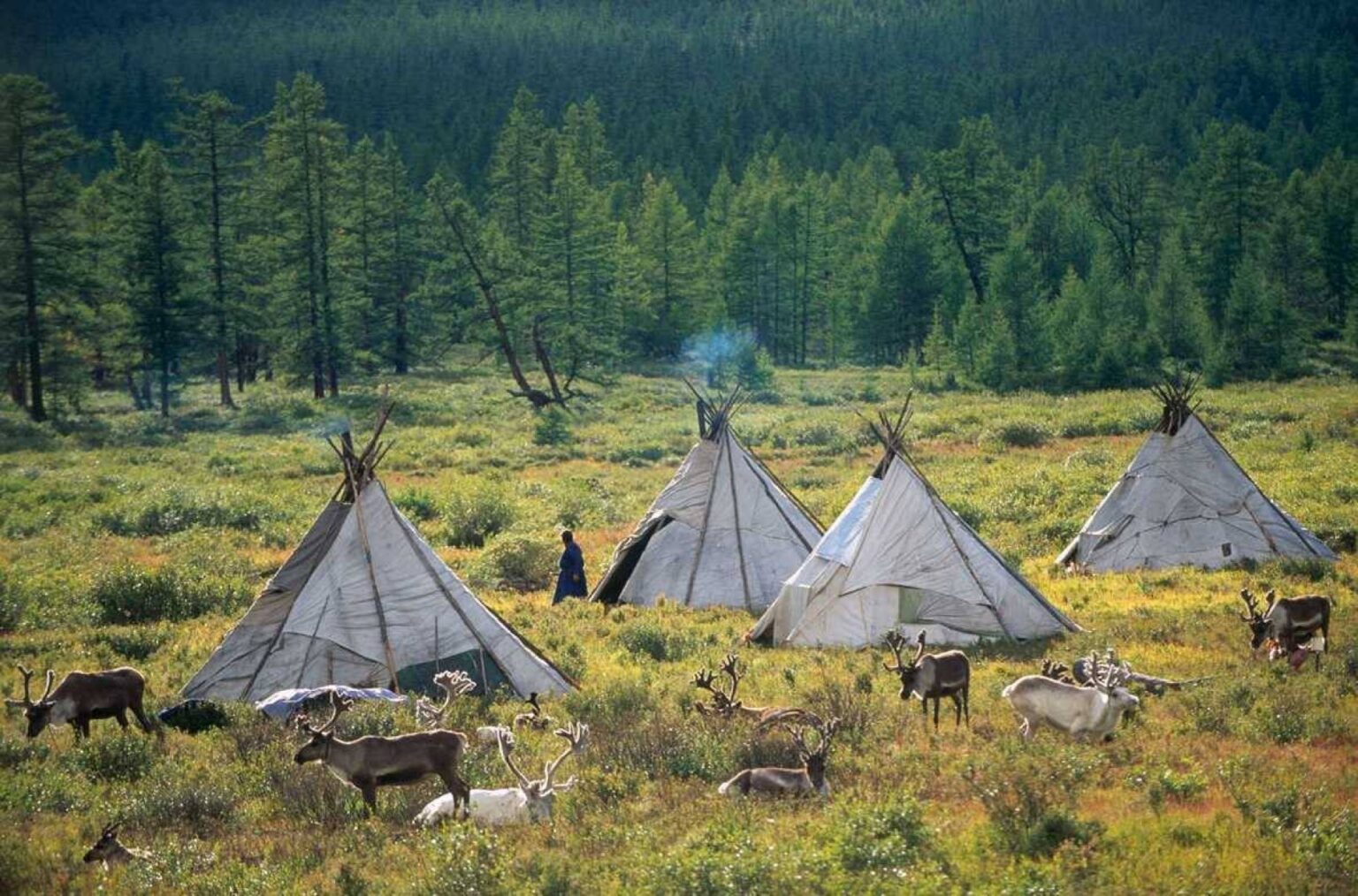
The northern taiga differs sharply from the open grassland often associated with Mongolia. It is a high, forested environment of larch, river valleys, wetlands and mountain passes. Winters are long and severe; summer can bring insects, rain and difficult river crossings.
“East Taiga” and “West Taiga” describe two main herding areas separated by mountains and access routes. Travel to either is demanding. Routes, river conditions and camp locations change, so an old map or social-media pin should never be treated as a guaranteed destination.
Seasonal movement and pasture
Families move camps to give reindeer suitable forage and relief from heat or insects. Timing depends on snow, vegetation, animal condition and household needs rather than a fixed tourist calendar. Conical dwellings, often called ortz, can be dismantled and moved with the household.
Mobility is skilled land management. Staying too long in one place can put pressure on lichen and nearby forest resources, while moving too often creates other costs. Herders read small environmental changes that a short-term visitor may not notice.
What reindeer provide
Reindeer can provide milk, transport and antler material. Riding and pack animals help people cross ground that is difficult for wheeled vehicles. Herds also carry social and cultural meaning: knowledge of individual animals, breeding lines, temperament and pasture is shared across generations.
It is misleading to describe reindeer only as tourist attractions or to assume they fill the same role as cattle on the steppe. Uses vary by family, season and animal. Responsible handling puts the reindeer’s condition before a visitor’s photograph.
Language, family and identity
Dukhan speech belongs to the Sayan Turkic language group, while Mongolian is important for education and public life. Language knowledge differs by age and household. Kinship networks connect camps, Tsagaannuur and relatives beyond the immediate herding area.
Community identity is expressed through language, family histories, herding skills and knowledge of place. “Reindeer people” is a convenient English label, but it should not erase the people behind the herd.
Belief and ritual life
Accounts of the Tsaatan often emphasize shamanic traditions. Some families do maintain ritual specialists and relationships with ancestral or landscape spirits, while individual belief and practice vary. Buddhism, secular life and contemporary institutions can also be present. Visitors should not request a ceremony as entertainment or photograph ritual objects without permission.
Education, health care and connectivity
Distance makes ordinary services difficult to reach. A 2024 United Nations Mongolia account of work with ethnic minorities in Khövsgöl highlighted continuing needs in health care, education, water, sanitation and communications. Families may divide time between taiga camps and Tsagaannuur so children can attend school or relatives can obtain care.
Connectivity can improve emergency communication and access to information, but infrastructure decisions should be made with the community and without damaging pasture or turning every camp into a public attraction.
Tourism: benefits and pressures
Tourism can bring guiding, horse transport and homestay income. It can also interrupt work, concentrate waste and encourage intrusive photography or excessive reindeer riding. Ethical operators agree on prices in advance, limit group size, remove rubbish and respect a family’s right to decline a visit.
How to visit respectfully
- Travel with a locally accountable guide and confirm that the household has agreed to receive guests.
- Ask before photographing people, homes, children, rituals or close views of animals.
- Do not feed, mount or touch a reindeer without the herder’s permission.
- Keep visits short enough that milking, movement and animal care can continue.
- Pack out rubbish and avoid disposable blue scarves or other offerings that become litter.
- Expect plans to change with weather, rivers and herd welfare.
Frequently asked questions
Are Tsaatan and Dukha the same?
The names generally refer to the same community, although individuals may prefer one term over the other.
Do all Tsaatan families live in the taiga year-round?
No. Residence and movement vary with schooling, employment, health, family circumstances and herd ownership.
Can visitors ride a reindeer?
Only when a herder says the particular animal, rider and conditions are suitable. A photo request is never more important than animal welfare.
Sources and related reading
Read the United Nations Mongolia report on services for remote ethnic-minority communities. For broader cultural context, see our guide to Mongolian shamanism.