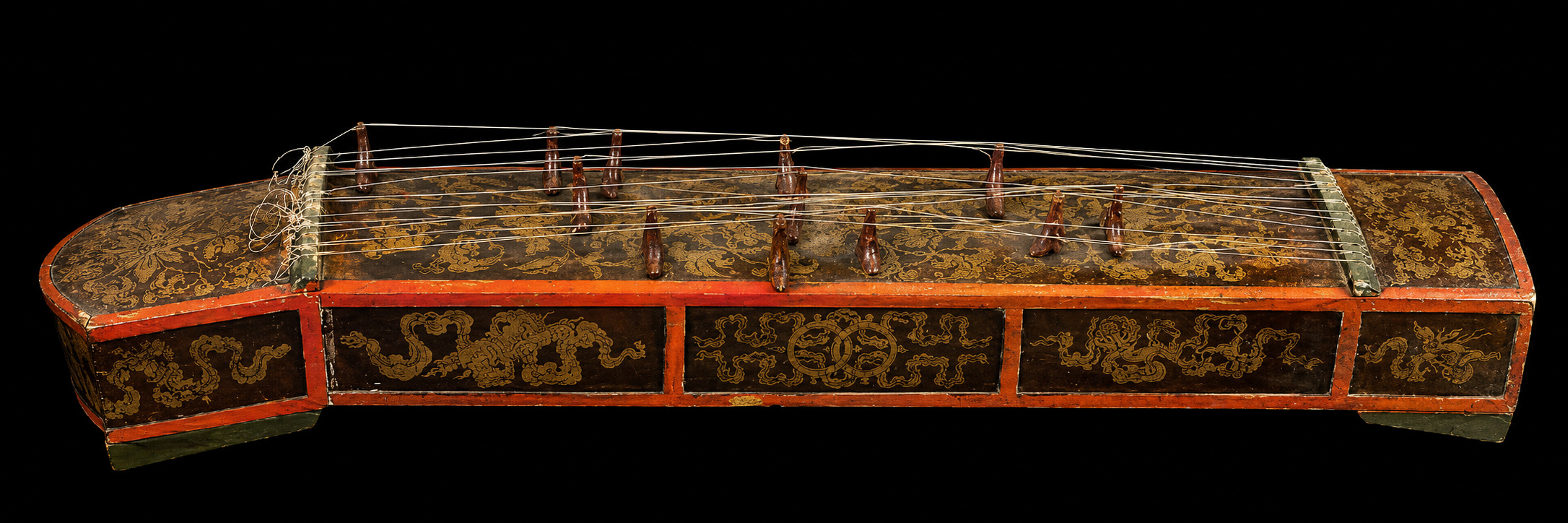
The yatga is a Mongolian zither with a long resonant body, movable bridges and many strings. Its bright, delicate sound brings a different colour to Mongolian music from the bowed morin khuur or the plucked tovshuur.
How the yatga works
Each string rests on its own movable bridge. Shifting a bridge changes the pitch, while the player shapes tone and ornament with both hands. This arrangement makes careful tuning and bridge placement part of the instrument’s character.
Sound and musical role
The yatga can lead a melody, accompany singers or add a flowing texture in ensemble music. Its ringing tone makes it well suited to measured phrases and ornament rather than heavy rhythmic attack.
Learning the basic technique
Begin with relaxed hands, clear single notes and slow scales. Learn where the bridges sit before attempting decorative bends or faster patterns. A qualified teacher is particularly helpful because hand position and tuning affect both sound and comfort.
Yatga, tovshuur and morin khuur
These instruments are often grouped together, but they create sound differently: the yatga is a zither, the tovshuur is a lute and the morin khuur is bowed. See the complete instruments guide for the wider family.
Finding a Mongolian instrument
Availability changes by maker and instrument. For an available traditional string instrument, browse the morin khuur collection or ask us about sourcing a yatga.