
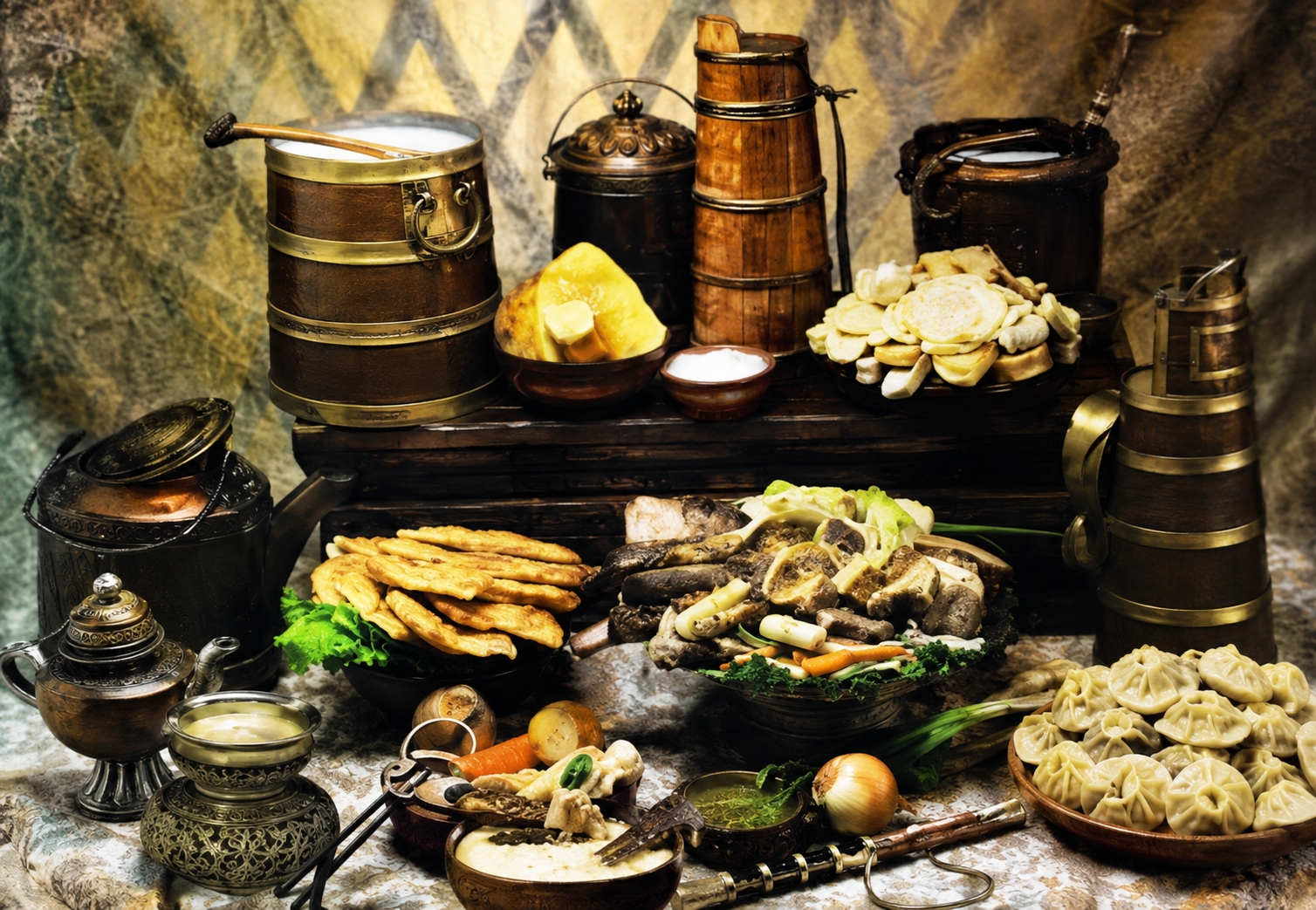
Mongolian food developed around pastoral life, seasonal scarcity and ingredients that could be preserved or carried. Meat, flour and dairy are central, but each dish has its own occasion, texture and method.
Mongolian food reflects a pastoral economy, a cold continental climate and the practical needs of family and travel. Meat, flour and dairy are prominent, but the cuisine is more varied than a list of “heavy dishes” suggests. Recipes and names differ by household and region. These ten foods offer a useful introduction rather than a definitive national ranking.
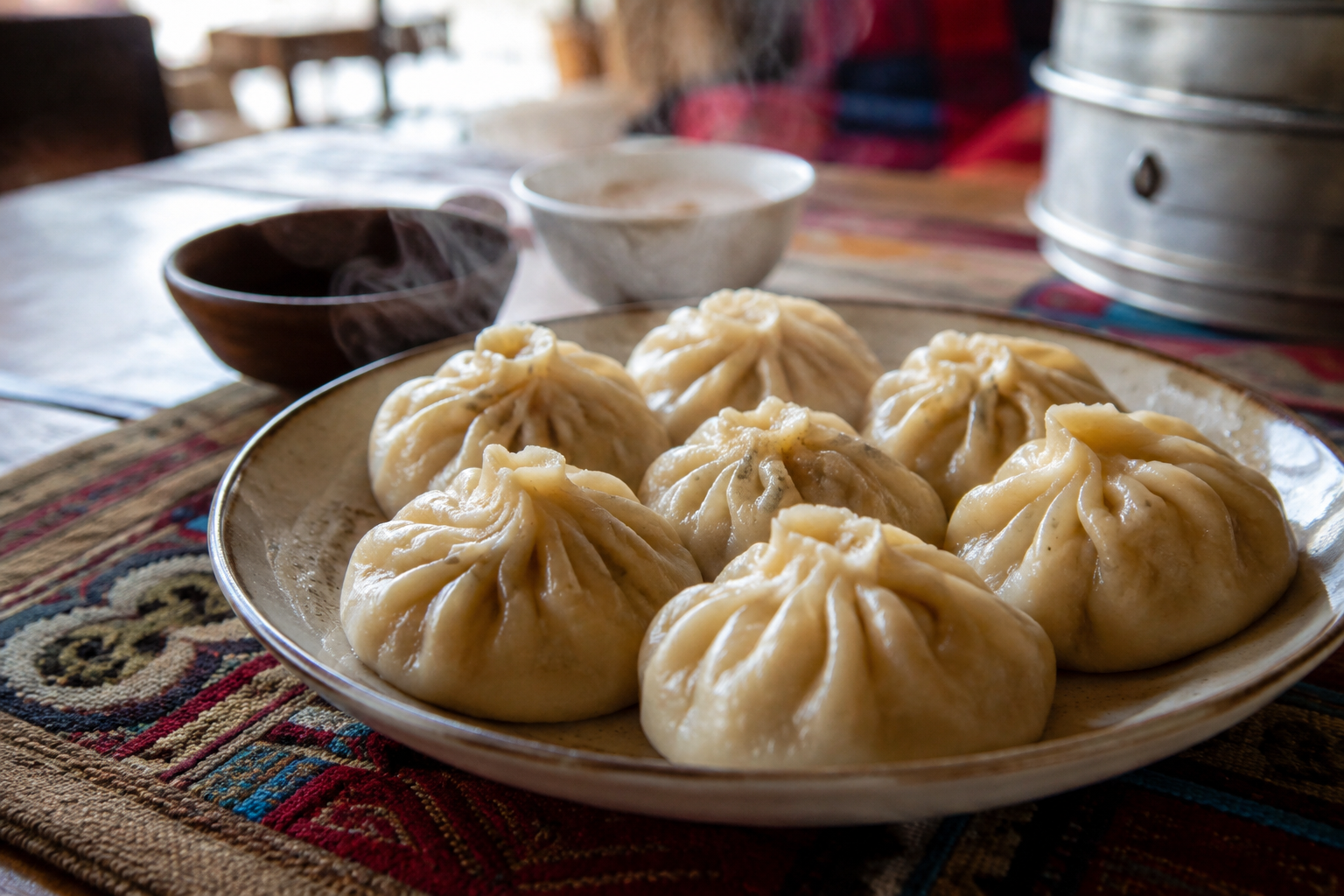
1. Buuz
Steamed dumplings filled most often with seasoned meat. Buuz are strongly associated with Tsagaan Sar, when families prepare large quantities for guests.
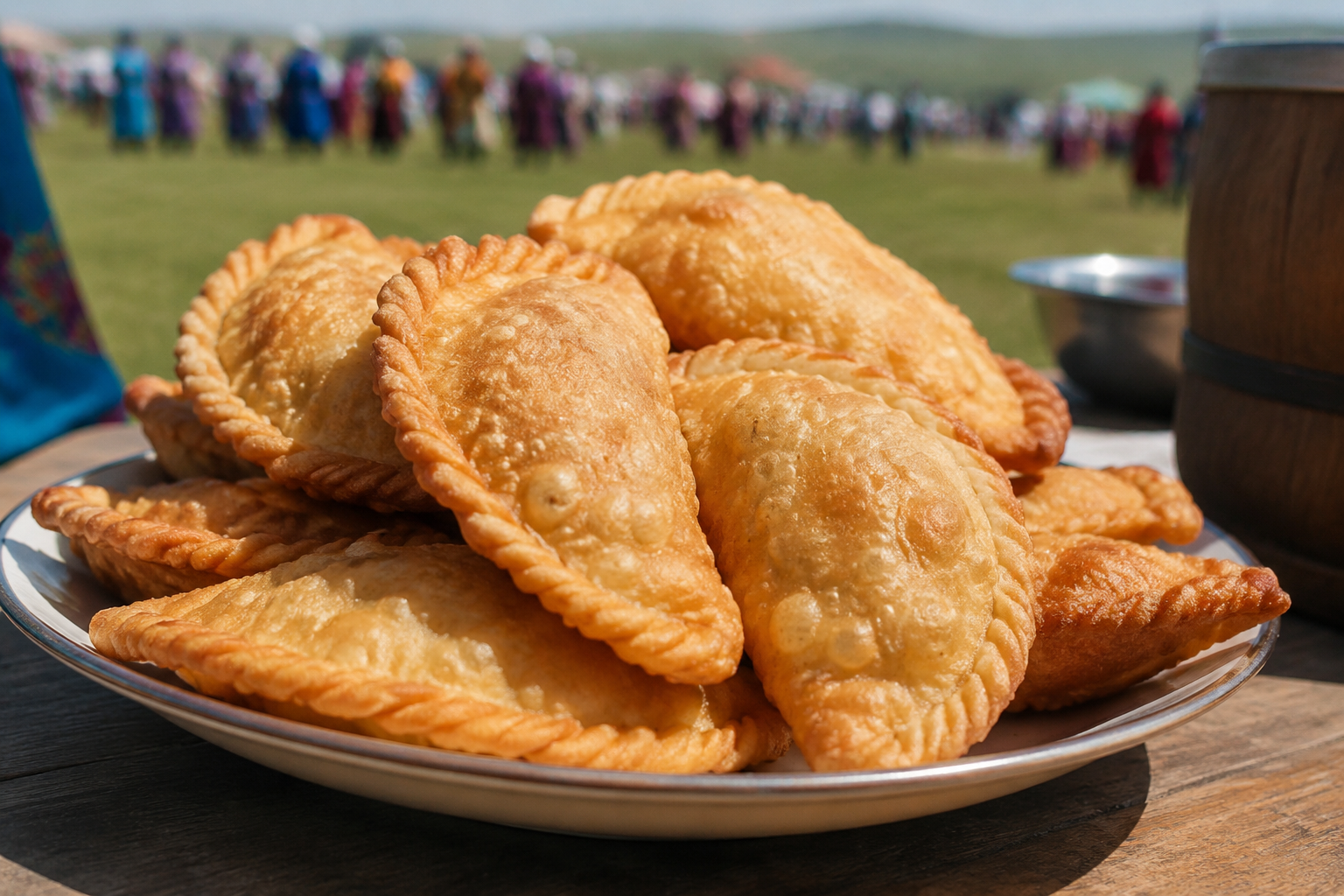
2. Khuushuur
Flat fried pastries filled with meat. Khuushuur are especially visible during Naadam and are best eaten hot and crisp.
3. Tsuivan
A satisfying noodle dish made with meat and vegetables. The noodles are often steamed with the other ingredients, producing a soft, savoury texture.

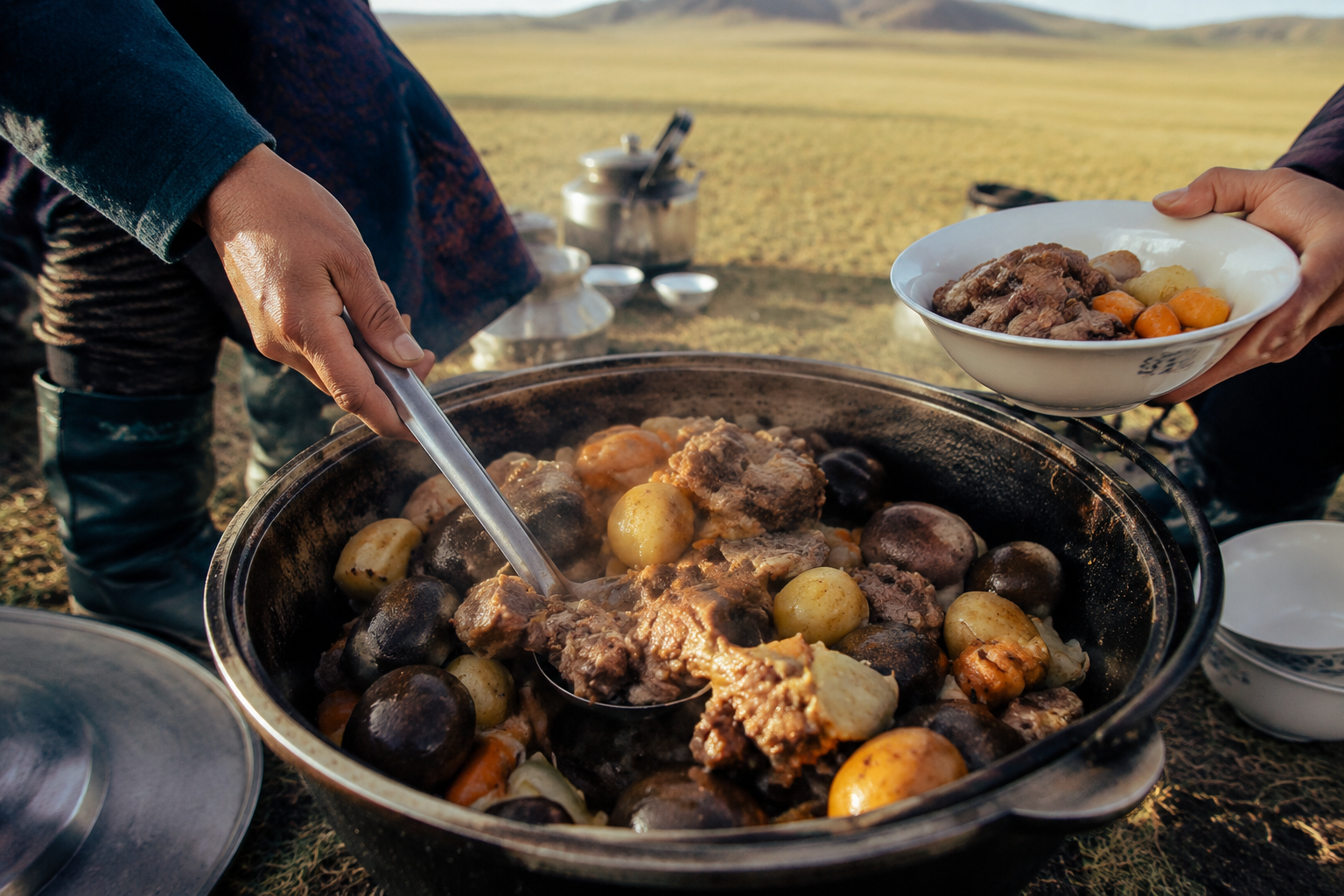
4. Khorkhog
Meat is cooked in a closed container with heated stones. Khorkhog is a social dish and preparation method, not simply “Mongolian barbecue.”
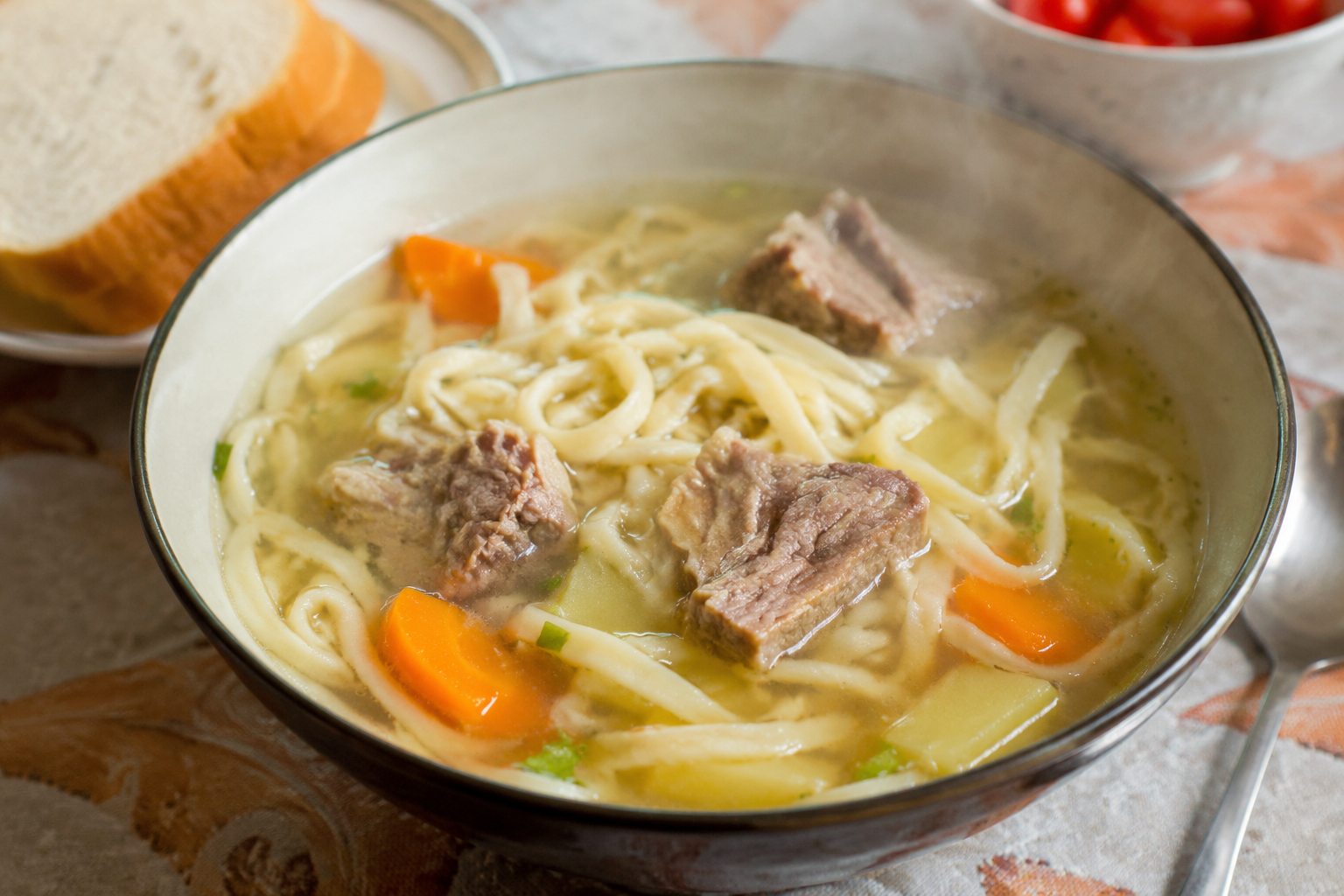
5. Guriltai shol
A simple noodle soup with meat and vegetables. It is an everyday comfort food with many household variations.
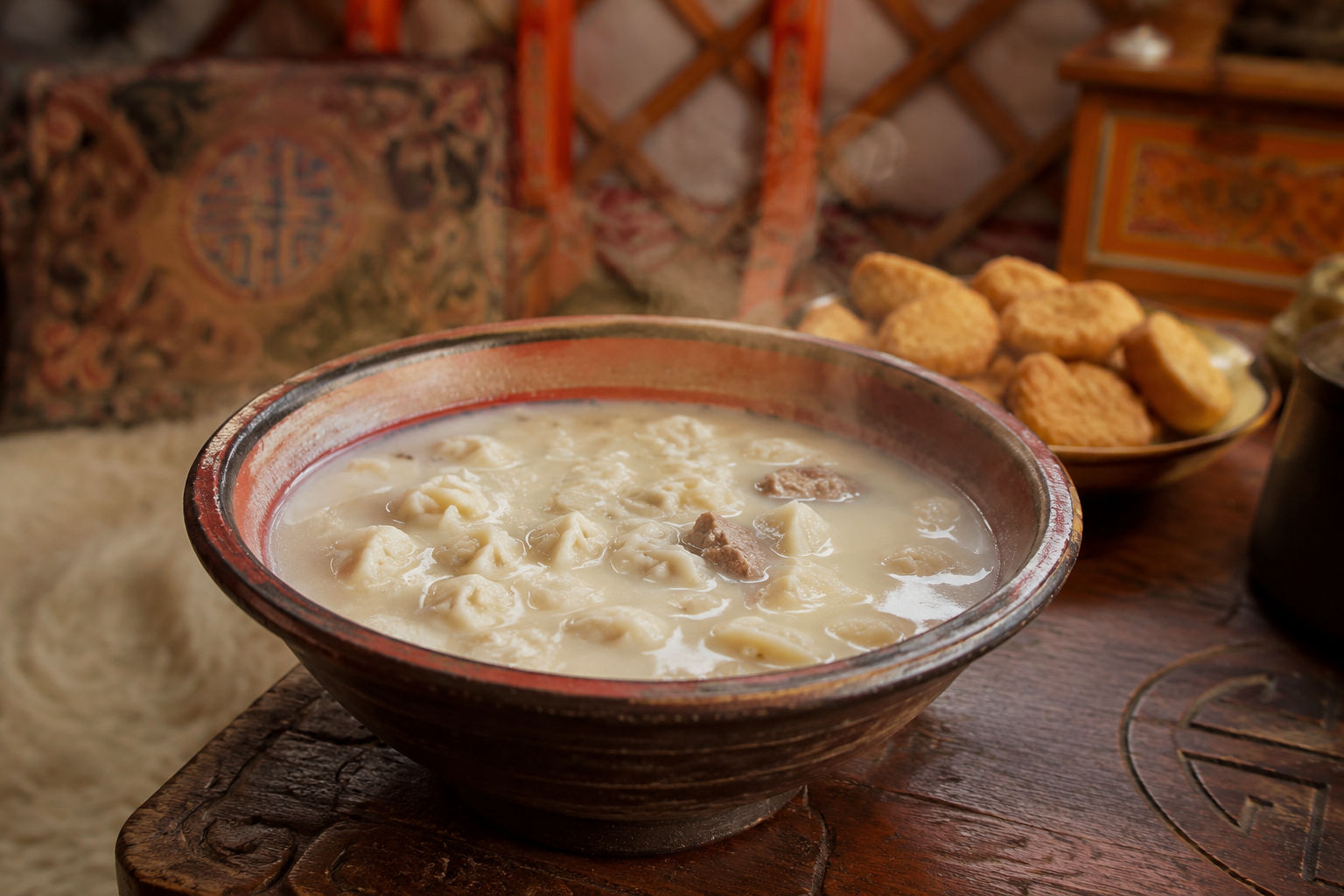
6. Banshtai tsai
Small dumplings served in Mongolian milk tea. The result is both a drink and a meal, combining dairy, salt and savoury dumplings.
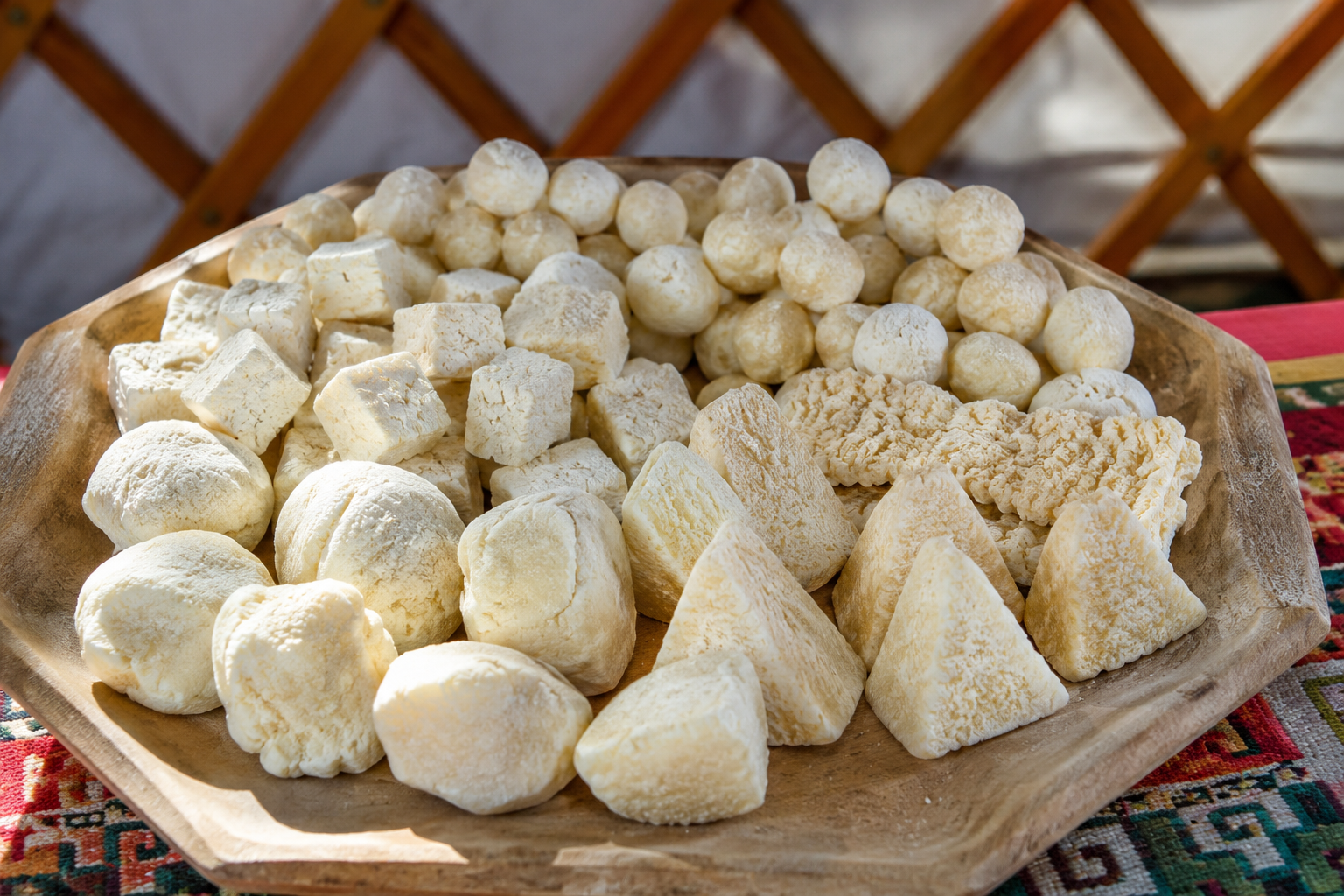
7. Aaruul
Dried curds made in many shapes, textures and levels of tartness. Packaged aaruul is one of the most practical Mongolian foods to ship when import rules allow it.
8. Suutei tsai
Mongolian milk tea, commonly made with tea, milk and salt. Instant versions provide an accessible introduction but do not represent every household preparation.

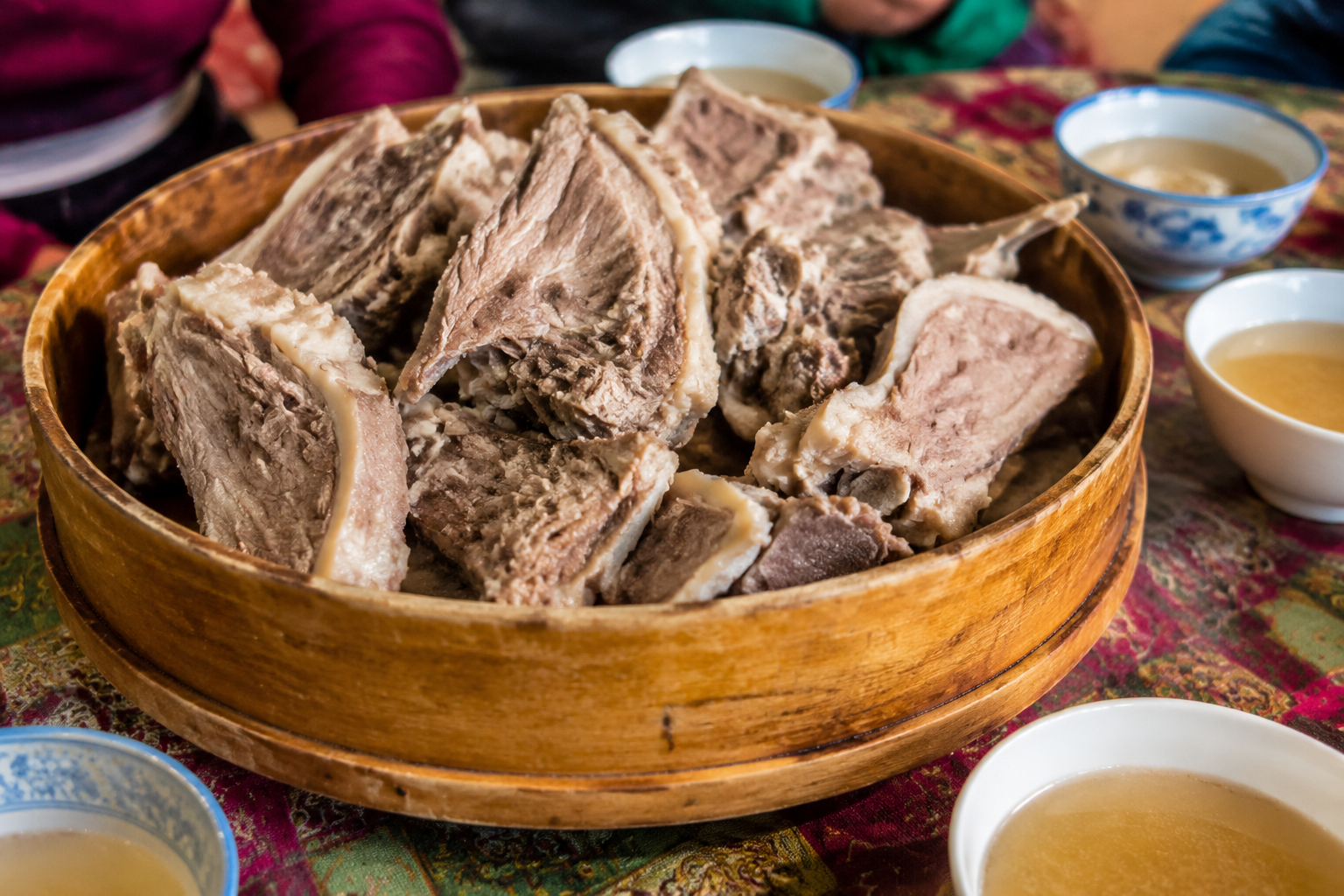
9. Boiled mutton and broth
Simply cooked meat allows the quality and flavour of the ingredients to lead. Cuts, accompaniments and serving customs vary.
10. Boortsog
Pieces of fried dough served with tea and at celebrations. Recipes range from crisp to soft and lightly sweet.

What can be ordered online?
Fresh meat dishes and hot dumplings are not realistic international e-commerce products. Focus the commercial section on shelf-stable tea, dried curds, noodles, seasonings and packaged snacks. Product pages must show ingredients, allergens, net weight, expiry date, storage instructions and destination restrictions. Browse Mongulai’s food collection and check local import rules before ordering.
Explore Mongolian flavours: Browse the Mongolian food collection and check ingredients, allergens and import requirements.
Frequently Asked Questions
What is Mongolia’s most famous food?
Buuz are among the best-known dishes: steamed dumplings commonly filled with seasoned meat and closely associated with Tsagaan Sar. Mongolia’s cuisine extends well beyond a single dish.
Is Mongolian milk tea salty?
Suutei tsai is commonly made with tea, milk, water and a little salt. Proportions and additions vary by household and region; it is not usually the sweet café-style milk tea many visitors expect.
What Mongolian food can be shipped internationally?
Packaged tea and some shelf-stable foods may be available, but eligibility depends on ingredients, packaging and destination. Check the exact listing and applicable import requirements; fresh dishes are not interchangeable with packaged products.
What should visitors with dietary restrictions know?
Ask about meat, dairy, wheat and preparation methods rather than assuming ingredients from a dish’s name. For packaged foods, read the full ingredient and allergen label. Explain allergies clearly to the host or food provider.