
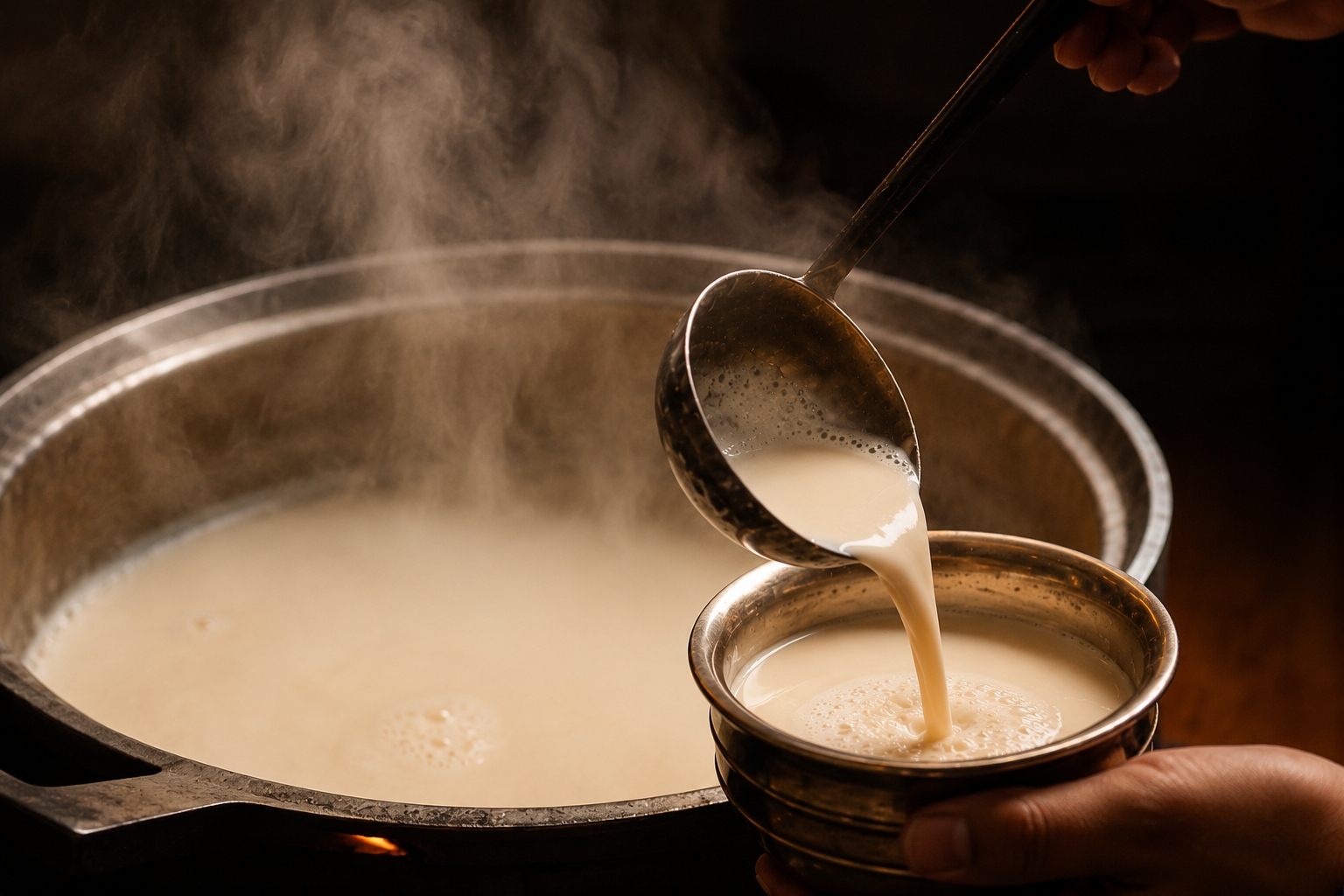
Mongolian milk tea, known as süütei tsai or suutei tsai, is a warm, savory tea made with milk, water, tea leaves and a small amount of salt. Unlike sweet café-style milk tea, this everyday Mongolian beverage has a mild tea flavor, a creamy body and a gently salty finish.
For many Mongolians, milk tea is more than a drink. It is part of daily meals, hospitality and the practical food culture of pastoral life. If you would like to try it at home, Mongolian Traditional Milk Tea offers a convenient introduction to its distinctive taste.
What Is Mongolian Milk Tea, or Suutei Tsai?
The name süütei tsai literally means “tea with milk” in Mongolian. The basic drink combines brewed tea, milk and salt. Some households enrich it with butter or fat, while others add toasted millet, rice, small dumplings or dried meat to make a more substantial preparation.
Its exact color and strength vary. A cup may be pale and milky or more deeply colored by the tea. The balance also changes from family to family: some people prefer a pronounced tea flavor, while others use more milk or a slightly saltier seasoning.
This flexibility is one reason suutei tsai remains so closely connected to home cooking. It is not a standardized café recipe. It is a living household tradition shaped by region, available ingredients and personal preference.
What Does Mongolian Milk Tea Taste Like?
Mongolian milk tea tastes creamy, warming and lightly savory. The salt should support the milk and tea rather than dominate them. Depending on the recipe, butter or yak ghee can add a richer aroma and fuller texture.
People expecting sweet milk tea are often surprised by the first sip. Suutei tsai normally contains no sugar, tapioca pearls or flavored syrup. Its character is closer to a light broth-like tea, although a simple version remains delicate rather than heavy.
The drink pairs naturally with Mongolian foods such as boortsog fried dough, dumplings, dried dairy products and meat dishes. Its gentle saltiness complements foods that might otherwise feel rich or dry.
Milk Tea in Mongolian Cuisine and Hospitality
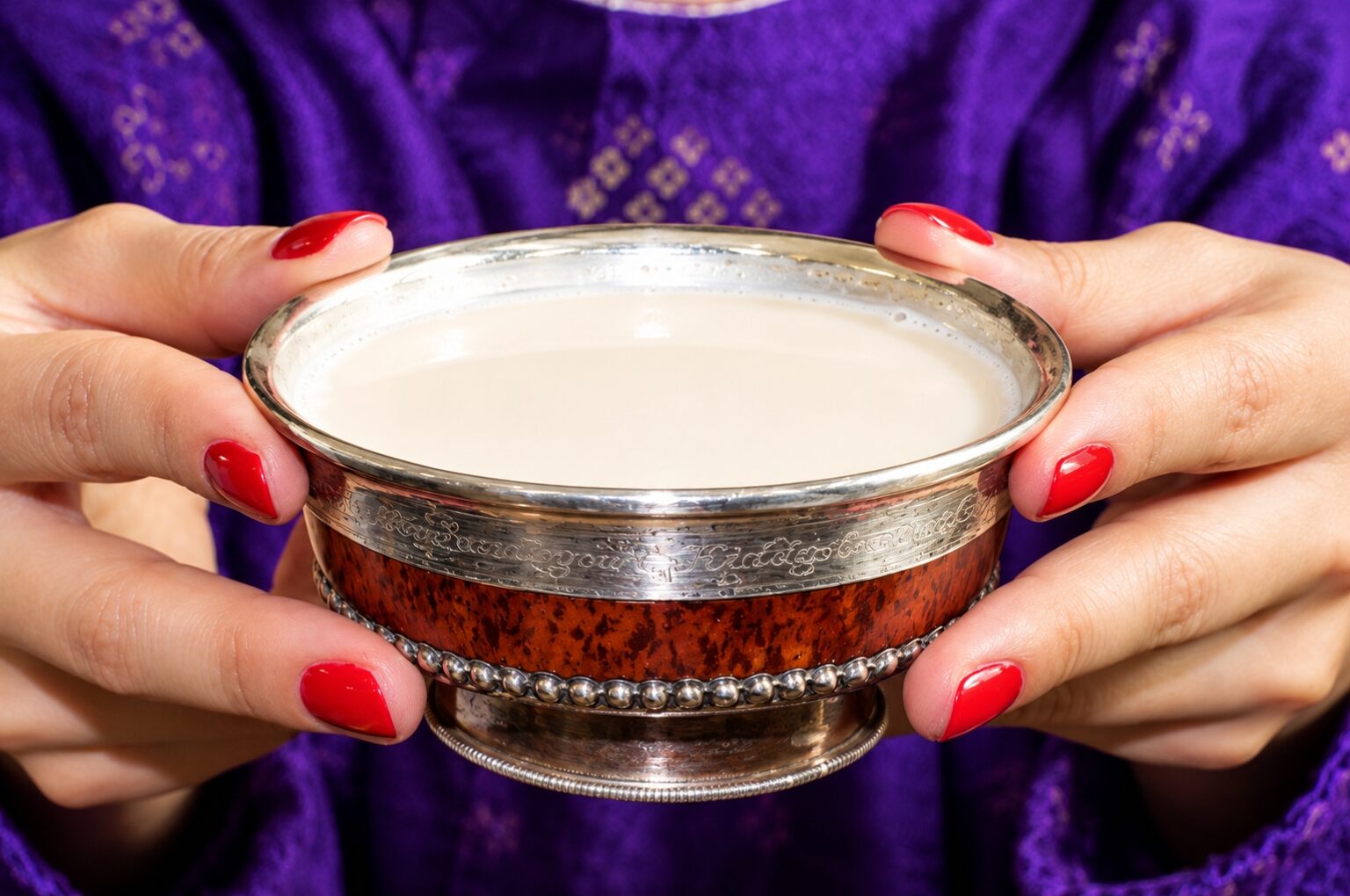
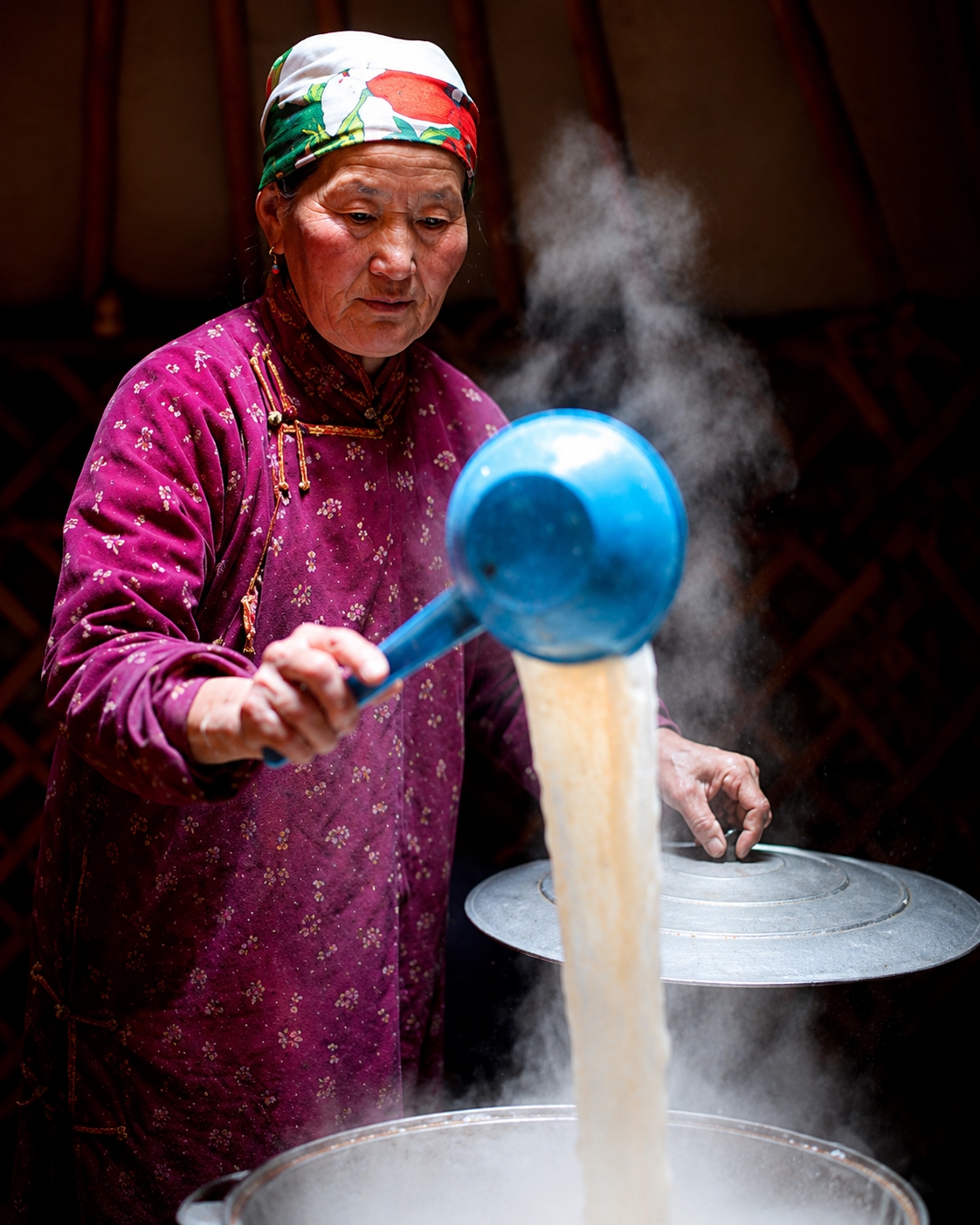
Tea is commonly prepared in the morning and served throughout the day. In a ger or family home, offering milk tea to a visitor is a familiar expression of welcome. A guest may receive tea soon after entering, often with snacks or a meal.
This custom reflects Mongolia’s pastoral heritage. Milk and dairy foods have long been important parts of the diet, while imported brick tea became integrated into local cooking. The result was a beverage suited to the climate, available ingredients and rhythm of nomadic life.
Regional and ethnic traditions add further variety. According to Discover Mongolia’s overview of Mongolian tea customs, recipes may include butter, millet, rice, dried meat or dumplings. The shared idea is not one rigid formula but the practice of turning tea and milk into a nourishing part of everyday hospitality.
How Do You Prepare Traditional Suutei Tsai?
Basic ingredients
- 2 cups water
- 2 cups milk
- 1 to 2 teaspoons loose black or green tea, or a small piece of traditional compressed tea
- A small pinch of salt, adjusted to taste
- Optional: a small spoonful of butter or yak ghee
Step-by-step method
- Bring the water to a gentle boil in a saucepan.
- Add the tea and simmer briefly until the water takes on its flavor and color.
- Pour in the milk and warm the mixture without allowing it to boil over.
- Add a small pinch of salt. Taste before adding more.
- Traditionally, the tea is aerated by lifting it with a ladle and pouring it back into the pot several times. This mixes the milk and tea and creates a smooth texture.
- Strain if necessary and serve hot.
Milk strength, tea type and salt level all affect the final cup. Begin with less salt than you think you need; you can always add a little more. Whole milk produces a richer result, but the recipe can be adjusted to the milk available in your home.
Traditional Variations of Mongolian Tea
Butter or yak-ghee milk tea
A small amount of butter or yak ghee gives the tea a richer body. This is especially appealing in cold weather. Mongulai customers reviewing yak ghee have specifically described using it successfully in milk tea, where it contributes a smooth, satisfying finish.
Millet or rice tea
Some preparations include toasted millet or rice. These grains add aroma and make the tea more filling. They also demonstrate how Mongolian tea can move between beverage and light meal.
Tea with dumplings or meat
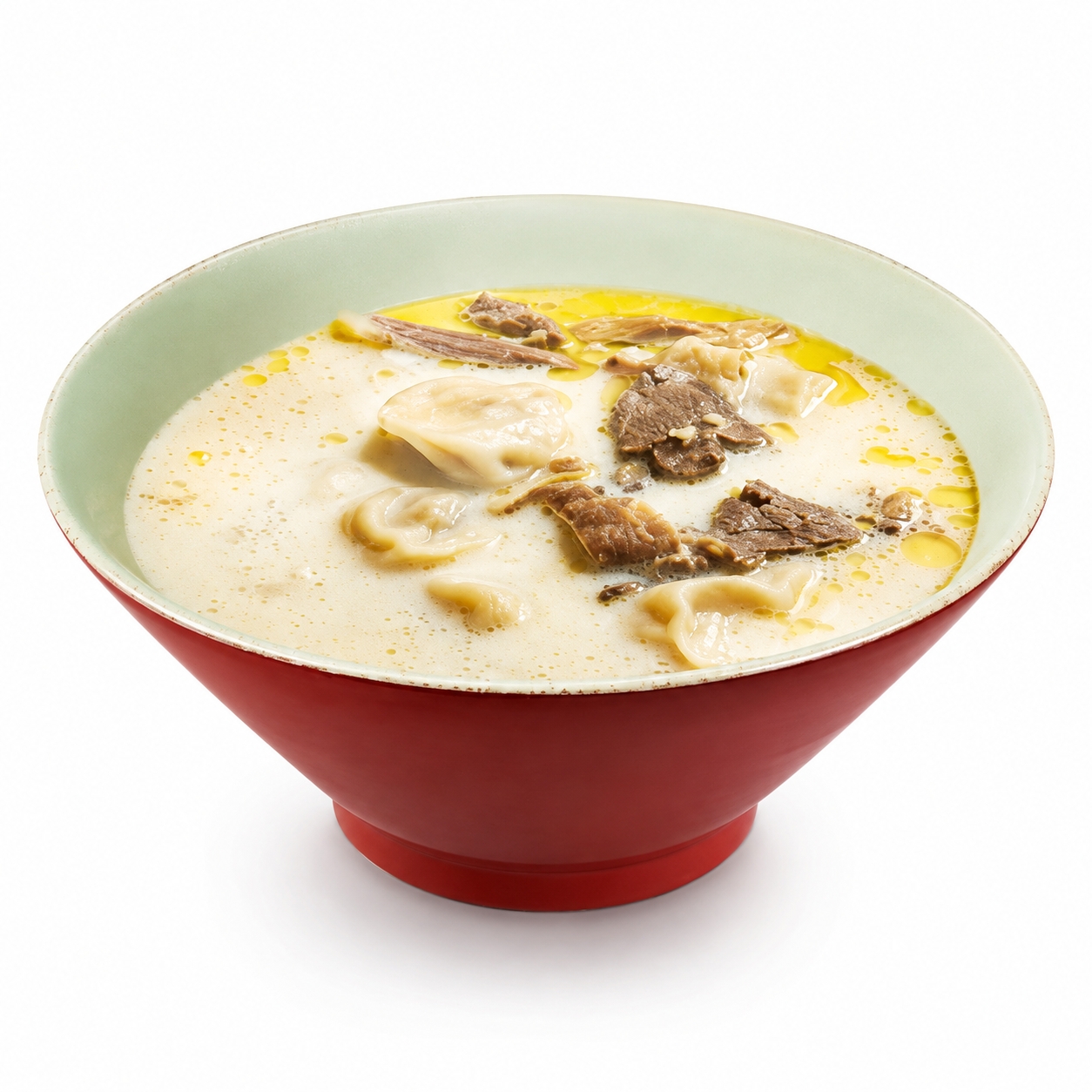
More substantial versions may contain small dumplings, dried meat or other additions. These preparations belong to a broader family of regional tea dishes and should not be confused with the simple everyday cup made only from water, tea, milk and salt.
Herbal alternatives
Not every Mongolian tea product is milk tea. Shoppers interested in caffeine-free or botanical flavors can also explore Mongolian Wild Herbal Tea and Ikh Taiga Mongolian Wild Herbal Tea. These are separate tea experiences and are not substitutes for the traditional suutei tsai recipe.
Choose the Right Mongolian Tea Product
- For the easiest first taste: Choose Mongolian Traditional Milk Tea, an instant milk tea powder designed for convenient preparation.
- For brewing your own version: Start with Mongolian Traditional Tea and adjust the milk and salt to your preference.
- For extra richness: Add a small amount of Yak Ghee.
- For pantry convenience: Milk Powder can be useful when fresh milk is unavailable. Follow the product instructions before adding it to tea.
- For a different Mongolian tea experience: Try one of Mongulai’s wild herbal teas.
You can compare these products with other pantry specialties in the Mongolian Food collection.
Frequently Asked Questions
Is suutei tsai always salty?
Salt is a defining ingredient in the traditional drink, but the amount varies. A well-balanced cup may taste only gently savory. When preparing it yourself, start with a small pinch.
Is Mongolian milk tea sweet?
Traditional suutei tsai is generally not sweetened. Its flavor comes from tea, milk and salt, with optional butter, ghee or grains.
Is black tea or green tea used?
Both are possible. Traditional recipes often use compressed tea, while home cooks outside Mongolia can prepare a practical version with loose black or green tea. The choice changes the strength and aroma but not the essential method.
Can I make it without fresh milk?
Yes. Reconstituted milk powder can be used when fresh milk is not available. Follow the milk powder instructions first, then use the prepared milk in the recipe.
How do I prepare instant Mongolian milk tea?
Follow the directions on the product packaging because serving sizes can differ. Instant powder is intended to make preparation faster while preserving the recognizable savory milk-tea profile.
Does Mongolian milk tea contain dairy?
Traditional and instant milk tea products generally contain milk or milk-derived ingredients. Check the current product label and ingredient list before purchasing if you have an allergy, intolerance or dietary restriction.
Try Mongolian Milk Tea at Home
Suutei tsai offers a direct introduction to Mongolian beverage culture: simple ingredients, a savory taste and a tradition of welcoming guests. You can prepare it from tea and milk, enrich it with yak ghee, or begin with an instant blend.
Shop Mongolian Traditional Milk Tea or browse the complete Mongolian Food collection to explore tea, dairy ingredients and other traditional products.