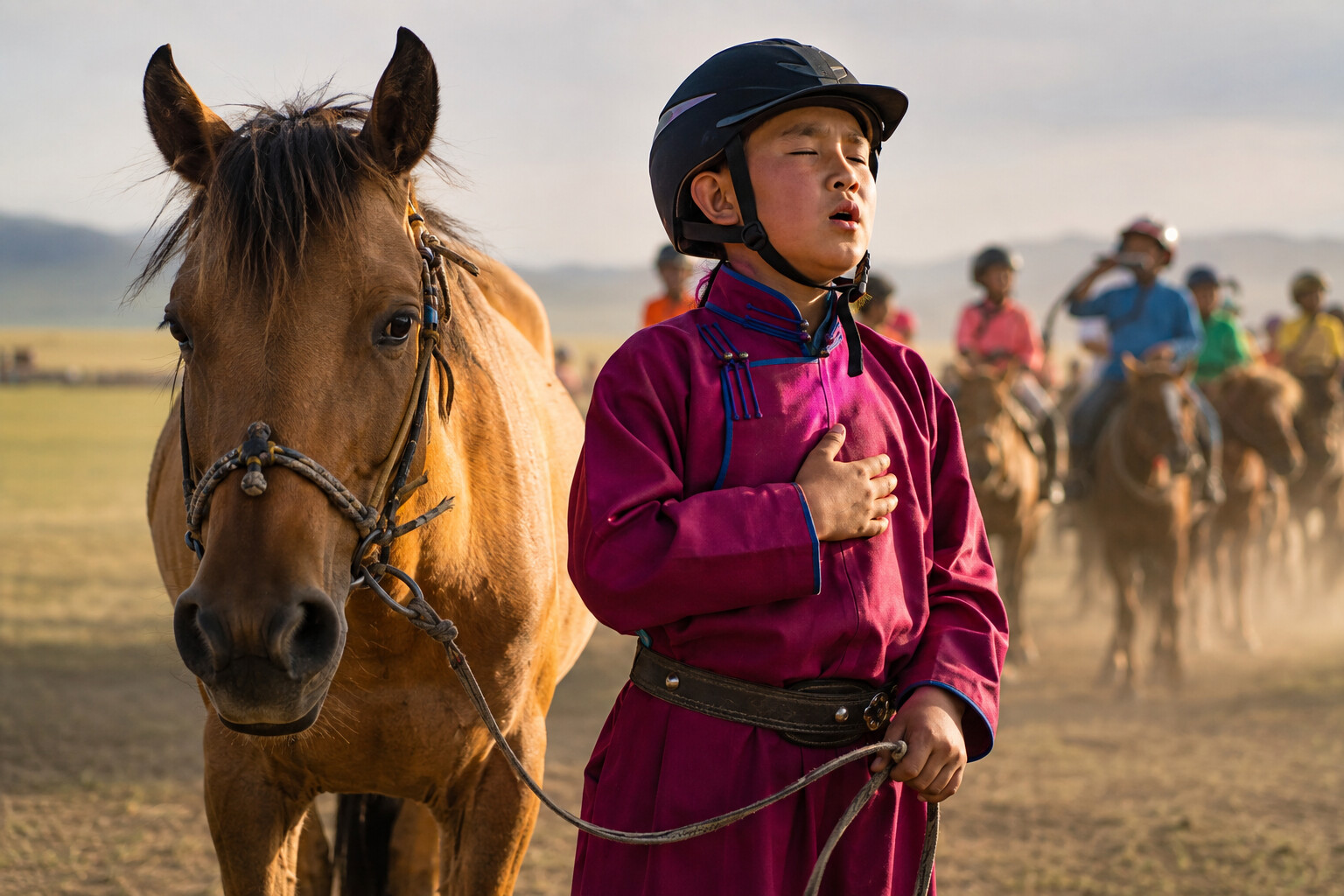
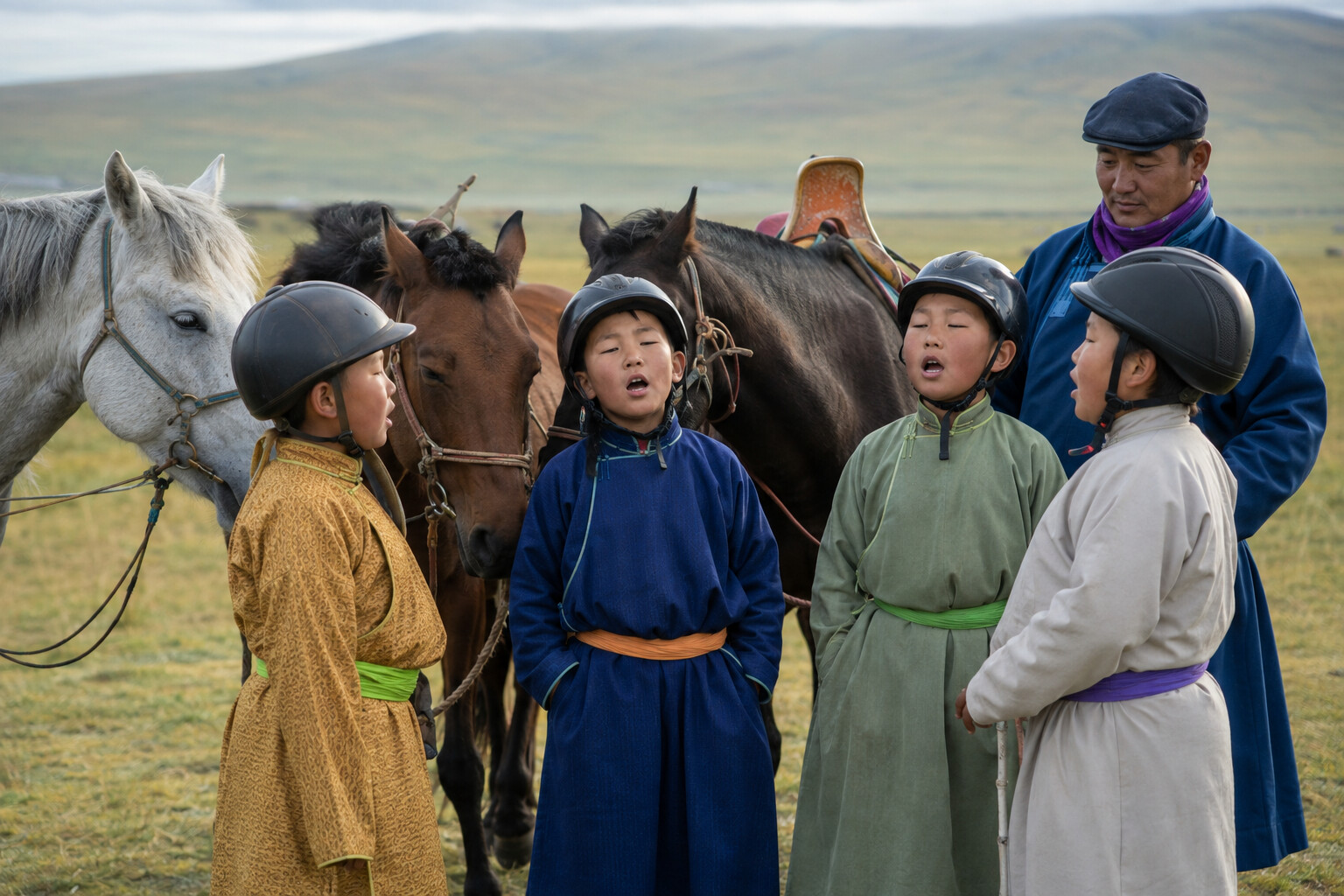
Giingoo is the long, carrying song associated with Mongolia’s distance horse races. It is sung by young jockeys and is heard around the gathering, start and return of the horses. The voice does more than entertain: it helps create a shared emotional space for riders, trainers, horses and spectators.
What does Giingoo sound like?
Giingoo is recognized by an extended, resonant delivery that can travel across open ground. Melodic shape and words vary, and the song should not be reduced to one standardized lyric. Its power comes from breath, projection, repetition and the relationship between the singer and the racing occasion.
When is it sung?
Jockeys may sing while horses gather, move toward the start or return after a race. Practices vary among races and localities. At Naadam, the sound becomes part of a larger sequence that includes preparation, racing, announcements, blessings and praise.
Giingoo and the horse
Mongolian racing culture treats the horse as the central athlete. Singing can calm and focus a group, but claims that one melody produces a guaranteed physical effect should be avoided. The cultural meaning lies in care, encouragement and the bond among horse, jockey and trainer.
How Giingoo differs from horse praise
Giingoo is related to the race atmosphere, while a horse-title or praise recitation describes the animal’s speed, appearance, lineage and performance in highly figurative language. The two can appear in the same celebration, but they are not identical forms.
Children, tradition and safety
Children have long participated as jockeys because of their light weight and riding experience. Modern discussion must also address safety. Protective helmets, supervision, suitable horses, weather assessment and enforceable race standards are essential. Celebrating tradition does not require ignoring preventable risk.
Listening respectfully
Giingoo is not simply background music for a travel video. If recording at a community event, ask permission where practical, avoid crowding riders and do not interrupt trainers working with horses. Identify the performer and event accurately if the recording is published.
A living sound of Naadam
Alongside wrestling and archery, horse racing forms one of the best-known parts of Naadam. Giingoo gives that race a human voice—one that carries excitement, discipline and affection for the horse across the steppe.
Breath, training and performance
The exposed steppe setting rewards a clear tone and controlled breath. A convincing performance is not simply loud: the singer shapes sustained notes while remaining connected to the pace and emotion of the gathering. Children learn by listening to experienced riders and community performers rather than from one fixed written score.
Frequently asked questions
Is Giingoo a long song?
It shares an extended vocal quality with Mongolian long-song practice, but it is specifically associated with horse racing and should not be treated as an interchangeable label.
Does every jockey sing the same words?
No. Melodies, syllables and wording can vary by locality and occasion.
Can visitors record it?
At a public event, follow organizer rules. For close or informal performances, ask the singer or guardian before recording or publishing.